

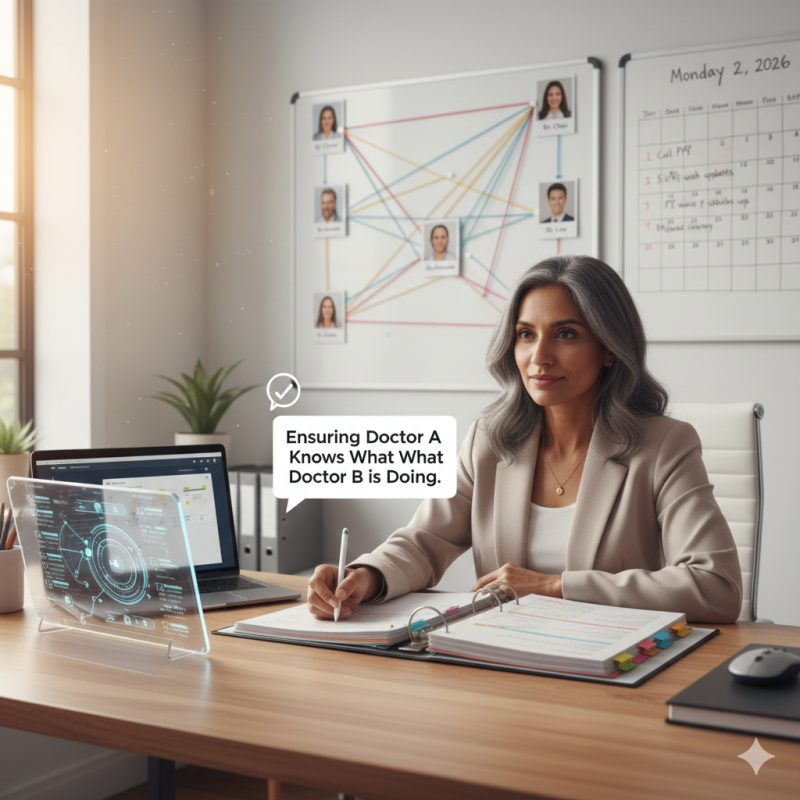
Dealing with one doctor can be enough of a challenge, but navigating a labyrinth of specialists—a cardiologist, an endocrinologist, a neurologist, and a primary care physician, for example—can feel like orchestrating a symphony where no one has the same sheet music. Each doctor focuses on their specific area, which is excellent for targeted care, but without effective coordination, crucial information can fall through the cracks, leading to duplicate tests, conflicting advice, and immense frustration.
But it doesn't have to be this way! You can become the conductor of your own healthcare orchestra. Here’s how to centralize your records and ensure everyone is on the same page.
The Central Hub: Creating Your Personal Health Record (PHR)
Think of your PHR as your health "command center." This is a comprehensive, organized collection of all your medical information, accessible to you at any time.
-
Go Digital (or Get a Binder):
-
Digital: Use a secure cloud service (like Google Drive, Apple Health, or a dedicated health app) or a USB drive. This allows for easy sharing and backup.
-
Physical: A sturdy three-ring binder with dividers for each specialist or category (e.g., Medications, Test Results, Appointments).
-
-
What to Include in Your PHR:
-
Contact Information: Names, phone numbers, and addresses for ALL your doctors, pharmacies, and emergency contacts.
-
Medication List: A complete, up-to-date list of all prescriptions, over-the-counter drugs, supplements, and vitamins. Include dosage, frequency, and the reason you take them.
-
Allergies: Clearly list all known allergies (medications, food, environmental) and the type of reaction.
-
Medical History: Dates of major diagnoses, surgeries, hospitalizations, and immunizations.
-
Test Results: Copies of recent lab results, imaging reports (X-rays, MRIs, CT scans), and procedure reports.
-
Appointment Summaries: Notes from each doctor's visit, including instructions, treatment plans, and follow-up recommendations.
-
Insurance Information: Copies of your insurance cards and relevant policy details.
-
Bridging the Communication Gap: Ensuring Doctor A Knows Doctor B
Even with a perfect PHR, you need strategies to facilitate communication between your care team.
-
Empower Your Primary Care Physician (PCP):
-
Your PCP should be the quarterback of your healthcare team. Ensure they receive copies of all specialist reports and test results.
-
Schedule regular check-ins with your PCP to review all specialist recommendations and reconcile medications. They can often spot potential conflicts.
-
-
Request Records Be Sent:
-
After every specialist appointment, politely ask the office to send a summary of your visit and any relevant test results to your PCP and any other relevant specialists.
-
Many offices have electronic systems that make this easy. If not, ask for a printed copy to deliver yourself or fax.
-
-
Bring Your PHR to Every Appointment:
-
This is crucial! Hand your medication list to every doctor. Offer to share relevant test results or summaries from other specialists.
-
Don't assume doctors have read every note in your electronic chart—they often don't have the time to sift through extensive records from other practices.
-
-
Be the Messenger (When Necessary):
-
Sometimes, you might need to manually facilitate communication. If one specialist recommends a change that impacts another's treatment (e.g., a new medication that interacts with an existing one), call the relevant office yourself to flag it.
-
-
Utilize Patient Portals:
-
Sign up for and regularly check all patient portals. These often allow you to view test results, message your doctors, and sometimes even share records across systems.
-
Staying Sane: Tips for Managing the Overwhelm
-
Designate a "Health Advocate": If possible, have a trusted family member or friend accompany you to appointments, take notes, and help organize your PHR.
-
Keep a Running Question List: As questions pop into your head, write them down so you don't forget them during your appointments.
-
Pace Yourself: Don't try to solve every problem at once. Break down tasks into manageable steps.
Managing multiple specialists can feel like a full-time job, but by creating a robust personal health record and actively facilitating communication, you can take control, reduce stress, and ensure you're receiving the best possible coordinated care.
Add comment
Comments